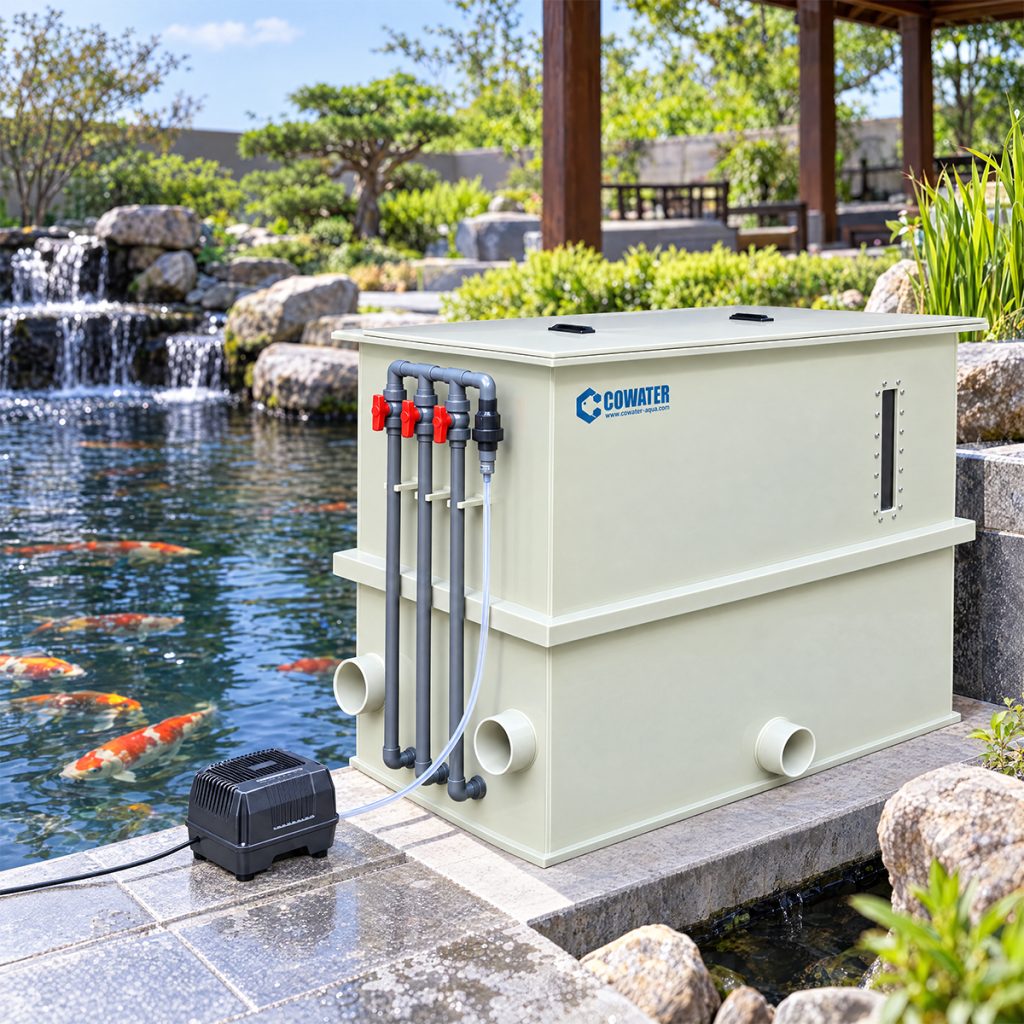
In aquaculture, fish rarely die of disease first. They die of water. Feed more and ammonia climbs. Exchange more water and your heating bill, pump hours and labour climb with it. The real ceiling on stocking density is not pond size — it is how consistently your system removes ammonia, every hour, without a spike. That is the entire job of the biofilter chamber, and it is the one component worth getting right.
How it works
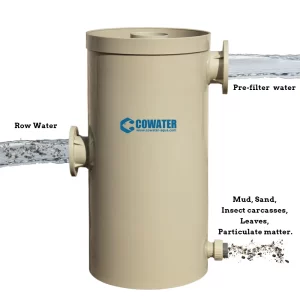
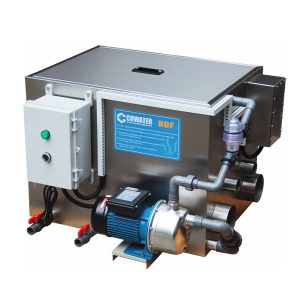
Step one — solids out first. Water passes mechanical filtration before it enters the chamber. Suspended solids are captured early; if they reach the media bed they smother the biofilm, and nitrification collapses within days.
Step two — biofilm establishes. Water enters and flows evenly through a bed of floating MBBR media. The media carries a very large protected surface area, and nitrifying bacteria colonise it within weeks. This is not a consumable — it is a living system that grows, sheds and renews itself.
Step three — ammonia is oxidised. Diffused aeration supplies the oxygen nitrification demands while keeping the media fluidised. Ammonia (NH₃/NH₄⁺) is oxidised to nitrite (NO₂⁻), then to nitrate (NO₃⁻), which is far less toxic and is removed by partial water exchange, denitrification or plant uptake. Physical filtration handles what you can see. The biofilter handles what you cannot.
Why farms choose it
Stable ammonia, higher density. Nitrification runs continuously instead of diluting once and rebounding. A flat water-quality curve is what lets you raise stocking density with confidence.
Less exchange, three costs down. Lower exchange volume cuts pumping, heating and water conditioning at the same time. In temperature-controlled systems, changing water is changing heat.
Self-renewing biofilm. Fluidised media collide and abrade, shedding old biofilm while new growth replaces it, so the system recovers quickly after a feeding spike or a short shutdown.
Low running cost, no consumable trap. The work is done by bacteria. Energy goes to a blower and a pump, and the media lasts for years rather than being replaced on a cartridge cycle.
Modular capacity. Chambers run independently and can be added in parallel as production grows, so you invest in stages instead of committing the full budget up front.
Retrofit friendly. Integrates with drum filters, protein skimmers, UV and ozone, and connects to existing RAS, round tanks, canvas ponds and raceways.
Applications
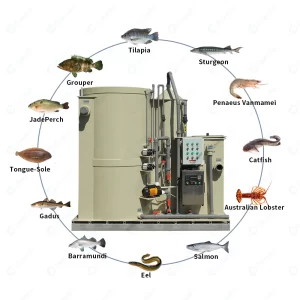
RAS fish farming · hatchery and nursery · aquaponics · holding and transfer · koi and ornamental high-density ponds