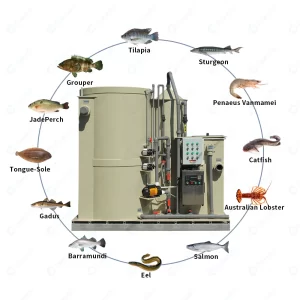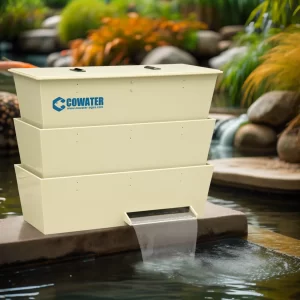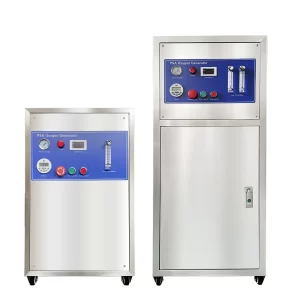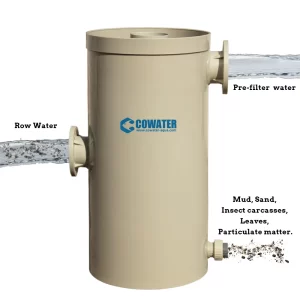
Aquaponics is an innovative eco‑friendly farming technology that integrates aquaculture (fish farming) and hydroponics (soilless plant cultivation) into one closed‑loop recirculating ecosystem联合国粮食…. Built on natural symbiosis among fish, beneficial bacteria and plants, it enables simultaneous production of fresh fish and vegetables with greatly reduced resource input, standing out as a promising alternative to traditional soil‑based agriculture.
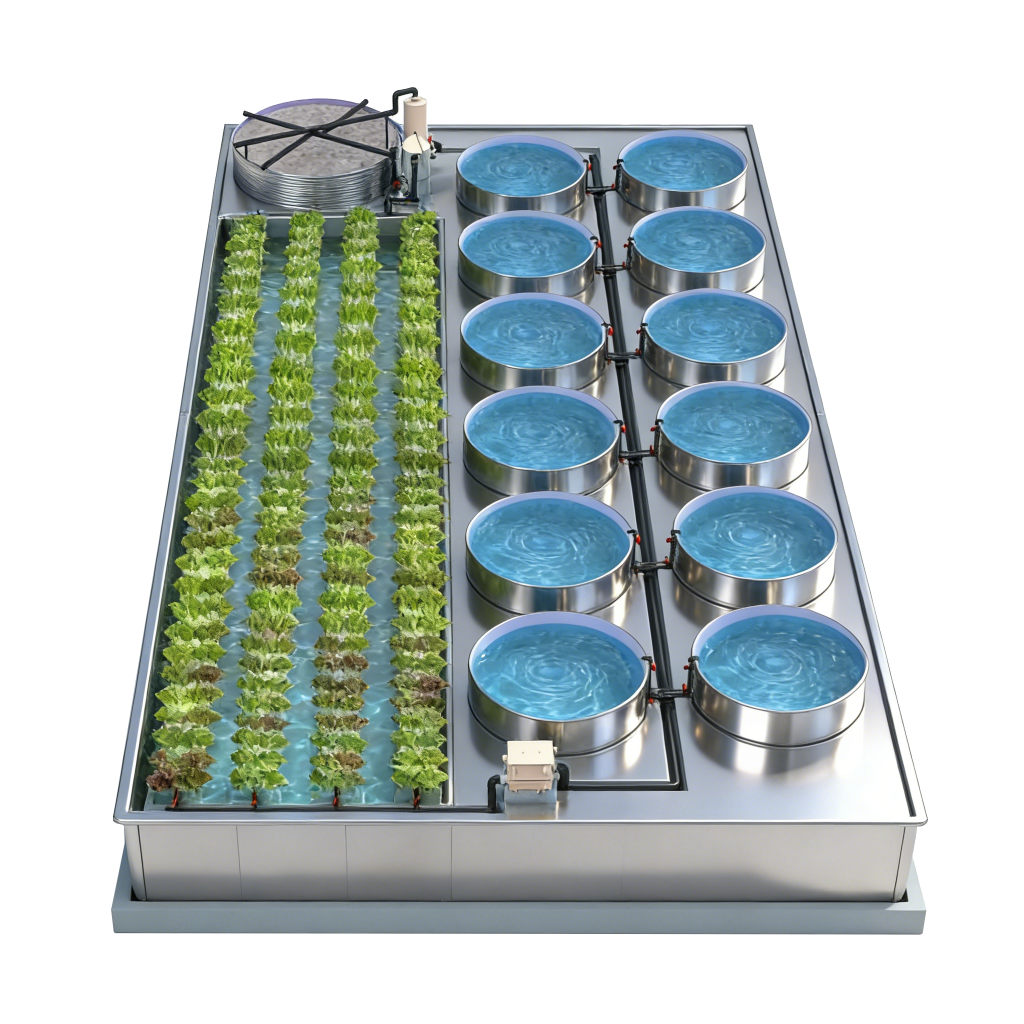
The working logic of aquaponics follows a complete natural nitrogen cycle. Fish live in fish tanks and excrete ammonia‑rich waste. Direct ammonia is toxic to fish, yet nitrifying bacteria inside filter media convert harmful ammonia first into nitrites, then into nitrates, which act as natural organic nutrients for plant growth. Nutrient‑loaded water flows to plant grow beds, where plant roots absorb nitrates and other minerals for vigorous growth. While feeding crops, plants purify and detoxify the water. The cleaned water circulates back to fish tanks, repeating the whole cycle without waste discharge.
Compared with conventional planting and fish raising modes, aquaponics delivers remarkable strengths. It saves up to 90% water versus traditional farmland, as water circulates repeatedly instead of draining awayAlibaba.co…. No chemical fertilizers or pesticides are required; plant nutrients come purely from processed fish waste, yielding safer, organic‑grade produce. Since soil is no longer needed, aquaponics fits diverse scenarios: compact household kits for balconies, medium‑sized greenhouse facilities, and large‑scale commercial farms. Leafy greens, herbs, tomatoes and various edible fish can be cultivated together all year round, even on barren land or urban spaces.
Nevertheless, aquaponics calls for basic system management. Operators need to monitor water temperature, pH value and dissolved oxygen to keep fish, bacteria and plants in balanced conditions. Proper stocking density and feeding control also prevent system overload.
As global water shortage and land degradation grow severe, aquaponics gains rising popularity for urban farming, home gardening and commercial agriculture. It turns waste into valuable nutrition, lowers environmental pollution, and realizes dual harvests of aquatic protein and fresh vegetables. This circular farming model offers a practical path toward resource‑saving and sustainable food production for the future.