The client was already running a conventional filtration setup, and after a period of operation the problems showed up together. The filter media simply could not hold enough solids to keep pace with 600 m³ of load, so the water stayed turbid and visibility kept dropping. Ammonia nitrogen climbed steadily as fish waste and uneaten feed broke down in the water, darkening the color and bringing an odor with it. And because media had to be pulled and washed by hand, with backwashing watched over manually, maintenance shifts kept multiplying while the cost only went up. In short, the old approach tried to match filtration capacity by adding water volume — and the bigger the pond, the further behind it fell.
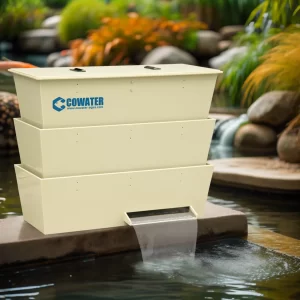
Rather than pushing the client toward a larger single unit and asking it to absorb the whole load, we configured two CW-KDF-40 combination filtration systems in parallel. That splits the 600 m³ into two manageable filtration units while keeping circulation across the full pond continuous, so one unit can be serviced without the pond stalling. The sizing came from the pond’s volume, turnover rate and organic load rather than from a catalog rating, which is why the pair lands where one oversized unit would simply have run inefficiently at part load.
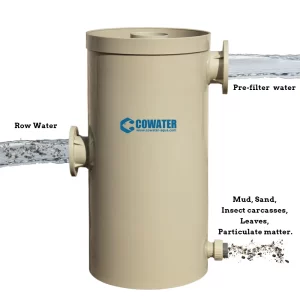
Four capabilities stack up to make that work. A 316L stainless steel 75-micron screen intercepts suspended particles with high precision, removing the visible cloudiness first and easing the load on everything downstream. Smart timer control paired with liquid-level sensing gives dual automatic backwash: it runs on schedule, triggers again if the level reads abnormal, and never needs a manual teardown, which is where most of the labor used to sit. Integrated K5 biological media, bacterial housing and filter cotton carry the process from physical capture into biological breakdown, targeting ammonia nitrogen specifically — this is the part that decides whether the water color holds. Dual 60W UV lamps suppress algae and pathogens, closing the loop as physical, biological and photolytic treatment working together.
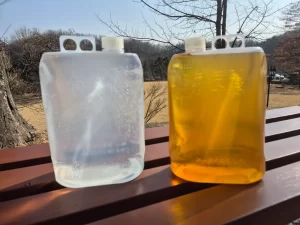
Once the system was running, the changes were easy to see. Water clarity came back as suspended solids were continuously captured, and the pond returned to a state the client could actually put on display. Ammonia nitrogen came under control as the K5 media established a stable nitrifying environment, so the color stopped going dark again and the odor eased with it. Algae were held in check by the dual UV lamps under high heat and strong light, breaking the familiar “clear, then green again” cycle. Maintenance dropped sharply, with automatic backwash replacing manual media washing and operations shifting from daily watching to periodic checks. What the client gained was not a one-off cleanup but a condition that holds between service visits. And the parallel layout gives both redundancy and room to grow — a single unit down does not stop circulation, and added load can be met by adding modules rather than replacing the plant.
What made this possible sits in our long-term work on integrated filtration systems. We do not assemble standalone pieces of equipment; we bring physical filtration, biological degradation, UV disinfection and automatic control into one system, so that water quality becomes an engineering figure that can be managed and held. Just as important is configuring to the actual duty. Tropical algae pressure, large volumes and a commercial operation that cannot shut down are constraints no off-the-shelf product covers; you have to work backward from volume, turnover cycle and pollution load. Two units in parallel for 600 m³ is not because the machines are small — it is because that is the most stable, most economical and most serviceable answer.
From design through commissioning, what we hand over is a water quality solution built to run for years, not a machine that has been sold.
If you are fighting the same cycle on a large landscape pond, a commercial water feature or an aquaculture system, bring us your volume and your current conditions. We will do the sizing first, then talk configuration.
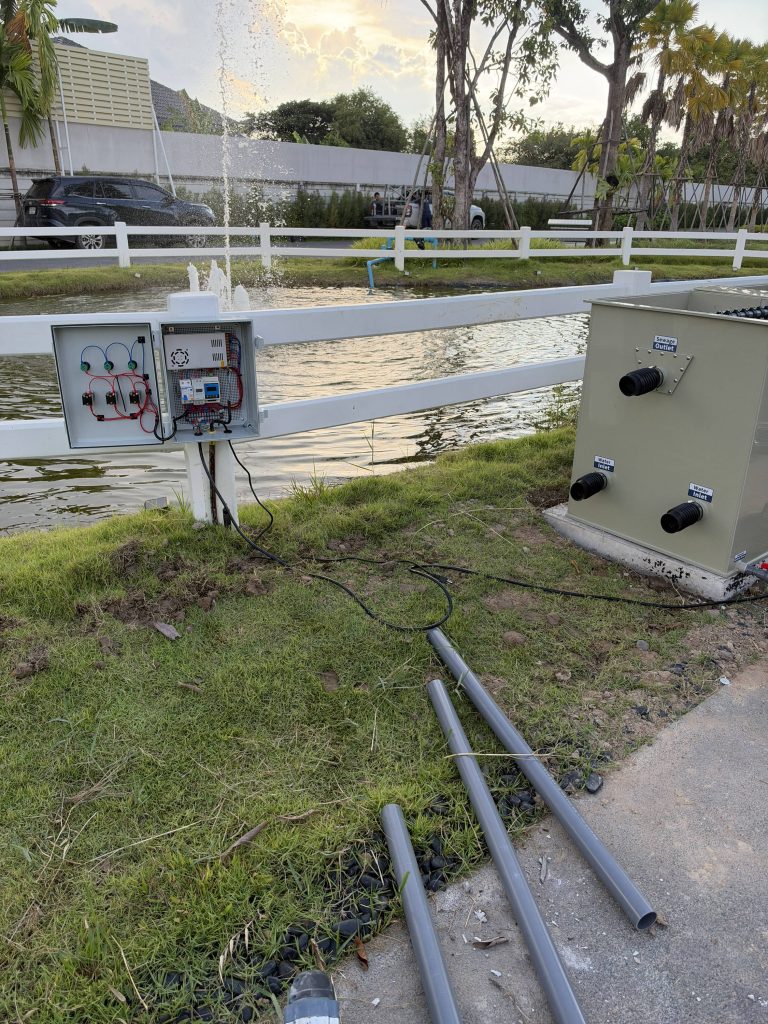
Thailand’s climate is brutal on outdoor water features. With water temperatures sitting above 30°C for most of the year and sunlight all day, algae reproduce on a daily clock rather than a weekly one. The client in this case manages a 600 m³ outdoor commercial pond — a large body of water with a long turnover cycle, fully exposed to the elements, and no room for the water quality to drift. When a pond that size starts to slip, manual labor cannot catch up.
The client was already running a conventional filtration setup, and after a period of operation the problems showed up together. The filter media simply could not hold enough solids to keep pace with 600 m³ of load, so the water stayed turbid and visibility kept dropping. Ammonia nitrogen climbed steadily as fish waste and uneaten feed broke down in the water, darkening the color and bringing an odor with it. And because media had to be pulled and washed by hand, with backwashing watched over manually, maintenance shifts kept multiplying while the cost only went up. In short, the old approach tried to match filtration capacity by adding water volume — and the bigger the pond, the further behind it fell.
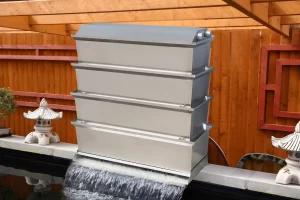
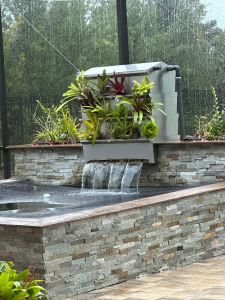
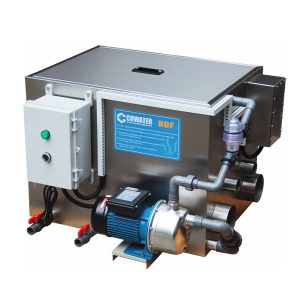
Rather than pushing the client toward a larger single unit and asking it to absorb the whole load, we configured two CW-KDF-40 combination filtration systems in parallel. That splits the 600 m³ into two manageable filtration units while keeping circulation across the full pond continuous, so one unit can be serviced without the pond stalling. The sizing came from the pond’s volume, turnover rate and organic load rather than from a catalog rating, which is why the pair lands where one oversized unit would simply have run inefficiently at part load.
Four capabilities stack up to make that work. A 316L stainless steel 75-micron screen intercepts suspended particles with high precision, removing the visible cloudiness first and easing the load on everything downstream. Smart timer control paired with liquid-level sensing gives dual automatic backwash: it runs on schedule, triggers again if the level reads abnormal, and never needs a manual teardown, which is where most of the labor used to sit. Integrated K5 biological media, bacterial housing and filter cotton carry the process from physical capture into biological breakdown, targeting ammonia nitrogen specifically — this is the part that decides whether the water color holds. Dual 60W UV lamps suppress algae and pathogens, closing the loop as physical, biological and photolytic treatment working together.
Once the system was running, the changes were easy to see. Water clarity came back as suspended solids were continuously captured, and the pond returned to a state the client could actually put on display. Ammonia nitrogen came under control as the K5 media established a stable nitrifying environment, so the color stopped going dark again and the odor eased with it. Algae were held in check by the dual UV lamps under high heat and strong light, breaking the familiar “clear, then green again” cycle. Maintenance dropped sharply, with automatic backwash replacing manual media washing and operations shifting from daily watching to periodic checks. What the client gained was not a one-off cleanup but a condition that holds between service visits. And the parallel layout gives both redundancy and room to grow — a single unit down does not stop circulation, and added load can be met by adding modules rather than replacing the plant.
What made this possible sits in our long-term work on integrated filtration systems. We do not assemble standalone pieces of equipment; we bring physical filtration, biological degradation, UV disinfection and automatic control into one system, so that water quality becomes an engineering figure that can be managed and held. Just as important is configuring to the actual duty. Tropical algae pressure, large volumes and a commercial operation that cannot shut down are constraints no off-the-shelf product covers; you have to work backward from volume, turnover cycle and pollution load. Two units in parallel for 600 m³ is not because the machines are small — it is because that is the most stable, most economical and most serviceable answer.
From design through commissioning, what we hand over is a water quality solution built to run for years, not a machine that has been sold.
If you are fighting the same cycle on a large landscape pond, a commercial water feature or an aquaculture system, bring us your volume and your current conditions. We will do the sizing first, then talk configuration.